~ A text by Irma ten Brink inspired by the work of Yoginâm ~
How to Unlock Your Inner Essence:
A Practical Guide to Self-Analysis for Spiritual Transformation
Discover, Heal, and Transform Your World
Yes, those trying to live a spiritual life need introspection and self-analysis. But how do you do self-analysis? How does it work in a way that really matters? A way that truly brings deeper meaning into life? A way by which both you and the world around you transform? A way that can transform your entire life and bring true meaning and purpose?
I have been exploring this for about twenty-five years, and my tools have grown with me. I want to share some insights.
If you are stuck… or feel a longing
If you are stuck in your way of self-analysis, or stuck in life—feeling like you are standing still, feeling alone, sensing no movement, thinking there should be more to life... or you are curious about other ways of living, have life questions, you feel a certain longing within—then this blog is for you.
LivingNâm
Although I will share my personal approach, my teachings come mostly from Yoginâm, and I try to live what he brought to the world: pure wisdom, perspectives, and powerful tools which he called LivingNâm.
He wrote many books and gave interviews that are which are very helpful for reflecting on what it means to be human and to live in continuous transformation toward wholeness or completeness.
Self-analysis from an ego-only perspective
When most people think about self-analysis they think about questions like: “What are my qualities? What is my horoscope? What do I like or dislike? Where are my boundaries and how do I protect them? How can I get what I want?” These questions concern the persona or the ego.
This is natural, however it is good to realise this is only the beginning, and there is much much more!
There is a phase in life when this first focus is natural —it is a startingpoint and part of growing up. But it is good to realise this is a young phase, and it has not much to do with spirituality. It is important you learn to know yourself this way but from a spiritual perspective it is meant to be transcended as well, as you grow into adulthood in a deeper sense than age alone.
After you found out what this 'more' is about, when you have embraced and lived it, then this first face of questions also matures. Working on transforming your ego never stops, but it gains a different depth once it is seen within a wider perspective. You will naturally start asking similar questions learning to know yourself, but the questions will change with a different quality and depth.
If you want to explore what more there is you have to look into another direction. It is this 'more' I want to dive into with you in this blog.
Know Thyself
Inscribed on the temple of Apollo in Delphi is the injunction: “Know Thyself.”
Mystics across traditions—Imam Ali ibn Abi Talib among them and one of the first—say,
“To know thyself is to know thy Lord.”
This ancient wisdom remains essential for living a spiritual life.
In time I began to realize this is not about my horoscope, becoming more assertive, or merely training skills to protect myself or achieve goals. While these can be related, there is much more behind that wisdom.
I discovered that self-analysis is really about “What am I beyond myself?” What does it mean to be a human being? What is life’s task, meaning and purpose?
There is an Essence you can discover—in silence only
This Essence, the “beyond myself,” the transcendence, this Unknowable Yoginâm refers to with the sound Abbah, is what mystics and sages across ages address. It cannot be described; you must begin looking for it yourself. LivingNâm gave me tools to search for it, and ultimately to become mindful and to remember constantly.
But what happens in the process?
While searching for this Essence—or, as in Arthurian myth, the Holy Grail—you encounter what are often called “your veils”: everything that grabs your attention and prevents attunement with your Essence. It is easy to get lost there.
We can become so preoccupied with the veil itself that we forget we are trying to transcend it to find our Essence. Self-analysis without the aim of attuning to your Essence becomes egocentric entertainment.
You need a practice that guides you: one that helps you transcend the veils through transformation rather than getting trapped in them. A practice that helps you remember—a state of mindfulness.
Yoginâm writes:
“All living is transcendental
Expressing infinite potentiality
In an infinite variety
Of which human living is a distinct range
A human living has an inherent urge
To transcend its range and widen itself
Human living expresses what is beyond that living
And has an inherent longing for beyond living
This is carried by imagination
That in human living gives direction”
(The Book of Nâm, pp. 9–10)
He continues:
“Human living searches for its transcendence in beyond
But is hampered by its natural inclination of being human
It consequently searches it where it cannot be found
It clothed the objective in rational and conceptional wrappings
That obscure it and cause it to remain hidden”
(The Book of Nâm, p. 10)
Although these quotes address more than self-analysis, they are relevant here.
Spirituality is not something you do—you become
Spirituality is not a hobby; it is a way of life. If you want to find what the “Beyond” refers to, you must explore—and that exploration is itself a transformation. Your whole life changes.
If you want to stop searching where it cannot be found, you must change how you search. That requires a completely different perspective on life; once you change your view, you begin to live differently, and life changes naturally. This is unavoidable ánd beautiful.
Self-analysis is an attitude
When life becomes challenging, this attitude helps. If you learn only to look at the “I,” you get stuck and miserable. Only from a wider perspective can things move, transform, and become meaningful.
When you embrace that you yourself are—with all your thoughts, feelings, beliefs, desires, and actions—resonance. And that ás resonance you participate in a wider field of resonance, then you are making progress.
Consider what this implies......!
The world around you, as you see it, is also resonance
Resonance within resonance—think of it as energy. Your energy and the energy of the world flow together like the smoke of two incense sticks: the smoke intertwines and cannot be separated. They influence one another.
Your resonance—created with every thought, dream, and desire, conscious and unconscious—intertwines with the resonance of your world and influences it.
This gives you a powerful key:
You may not be able to directly change the world or the people who influence you, but you can become conscious and choose which resonance you create and allow to blend with the world’s resonance (and, for that matter with, with the Whole in which everything shares).
Make a conscious decision to create positive resonance through your attitude to life, time and again in the present moment.
Of course, yesterday’s resonance is already blended and cannot be changed. But you can observe the consequence of it in your day-to-day life and draw conclusions which gives a second key.
And a second key:
First, start with consciously creating beneficial resonance through your life attitudes, anew - each moment in the Now.
Second, learn to see your daily life symbolically as a mirror. It reflects what you have been creating unconsciously. The more you see life as your mirror and as part of you, the more you recognize subtle signs that point to causes within yourself—how your habitual programs and inner attitudes have co-created your life to this point.
Asha - the Face of the Beloved
These signs can guide you. Poetically this is expressed as seeing life as the Face of the Beloved; in LivingNâm we call this 'living in Asha'.
This approach lets you address unconscious layers that create reality. Your mirror shows how you have unconsciously created your world—because most creation is done with unconscious programmes.
Here is also where the famous synchronicities appear.
Do you see how self-analysis becomes essential and gains ethical meaning? Through self-analysis you can become a co-creator of your world.
Again I want to stress: to transform the veils from the perspective of resonance, you need guidance—powerful tools to support you, guide you, and help you avoid getting lost.
Co-creator
You may have noticed I referred to a co-creator. If you wonder, “If I am a co-creator of my life, who or what is the other part?”—you touch the mystical.
Yoginâm hints at this in the above quote: "Human living expresses what is beyond that living and has an inherent longing for beyond living. This is carried by imagination that in human living gives direction”.
In Poetry this 'Beyond Living' is often named “The Beloved.” In LivingNâm we use the sound "Abbah". Because it cannot be named, we hint at it and use imagination to relate to it and find direction.
Now let’s get practical
Begin by becoming conscious of your thoughts, how you speak about yourself and others, how ethical your desires are, and how judgmental you may be—explore your general attitudes.
When you see the outer world as resonance reflecting your inner world—rather than a world simply happening to you—you can relate to it as your mirror, part of you.
You can ask questions such as: “Show me what I need to see.”
- A recurring issue or conflict: close your eyes, bring the situation to mind, and ask, “What do I need to see?”
- A physical problem, such as a recurring headache: “What do I need to see?”
- An intense dream: “Show me what I need to see.”
- A person you have difficulties with: “Show me what I need to see.”
Sit with the question; allow what comes. Don’t overthink—just sit and breathe and trust that answers arrive when they are ready. Often not as words or thoughts, but as a sudden knowing or an image with a sense of certainty. Sometimes the answer comes later through an overheard remark or a randomly opened book will provide it. Frequently the answers are surprising and unexpected—sometimes not what you wished for—but you sense they are true.
Practice
By practicing this bit by bit, you dive deeper; what is hidden in the subconscious will surface. Why? Because you have set your intent. You want it to happen—even if what comes is not always beautiful—driven by an inherent longing to find what is beyond living.
Take notes
Over time you will see patterns that repeat across situations. When life repeats itself in different forms, it is trying to demonstrate something to you.
Approach life this way and life becomes your guidance. Ignoring the signs life offers can cause problems and illness because you miss what is meant for you to see.
This is why spiritual life is often described as Listening.
As Ibn Arabi said:
“The heart does not speak; the heart listens.”
Are you inspired?
I invite you to join this search with me for a couple of days—a truly joyful endeavor. A powerful retreat on “Meaningful Living” begins this year 2026 on April 8 - August 12 and October 14—less explanation, more exploration through imagination, reflection, and contemplation.
Looking forward to diving in deep together.
Irma
Asharum Amonines

Newsletter: The ability to shape your future lies in the Now

To each person is the ability to shape the future
People are attached to their memories
They identify themselves with what they were
They relate everything of now to their past
They selfie themselves through the present
In an urge to solidify their past
With that habit they reject the present
More serious is that by identifying with the past
People ignore their ability to shape their future
Individually and in ways that are unique
To each person is the ability to shape the future
In the Certainty of Nâm and its Trust in the present
As always being ‘What Is’ as the Consequence
Of the Cause that we are, we have the ability
To create what we shall be tomorrow
Yoginâm, 2020
Memories and identification
The atmosphere of the Asharum - its tiled stone floors, Yoginâm’s writings, Rumi’s books placed in the living room, the scent of jasmine in the garden - seems to touch directly on something deeper, specifically when our guests have an Arabic background. In their reactions there is wonder along with curiosity. Often, that’s what leads guests to share something more of the story behind what they feel.
To stay with this specific example, sometimes, when it turns out that there has been a break with the - in this case Islamic - tradition in which the person grew up, the unexpectedness of the encounter appears to open something. Contemplating on the words of Yoginâm above, I wonder whether this sudden encounter with something so familiar in such a seemingly unrelated place postpones the automatic identification with the past tradition, providing the opportunity to view the relation to this tradition from a different perspective and thus creating another future.
In the case of our two most recent guests, both raised in Iran and now living in Germany, recognition brought with it a feeling of belonging—of being at home. One of them wished, for a next stay, to bring her mother along, who still lives in Iran. The other, during her time with us, was reminded of a poem by Rumi— she wrote it down in Farsi in our guest book—and afterward I searched online for its translation:
How could I know
How could I know that this longing would drive me so crazy
That it would make my heart a prison and my eyes a river?
How know tears like a flash flood would carry me away,
And hurl me like a boat into a vast sea of blood?
Those waves would beat and split this boat board by board
Until each board twists away from all the many tortures?
That the sea-monster would rise Its head - and swallow the sea
That such an immense sea would go dry like a desert plain?
That the devouring sea-monster would then split this plain
And suddenly pull me down into a pit, like Korah, in wrath?
When these transformations occurred naught remained
What do I know, when why and what swallow each other?
O how many the 'I don’t knows' there are - but I don’t know
For I have swallowed the foam of opium, to forget that sea!
Wondering
To be present in the moment is also to surrender, without knowing what you might expect, and being able to stay with your own thoughts during a period of vulnerability. It’s the art of living to remain still, perhaps even slightly unsteady - on one leg - without losing your balance. That’s not easy in a world that constantly urges you to keep going and thus pulls you away from the here and now.
A Personal Meditation Retreat offers the chance to be present with yourself in the moment, and a ten-day retreat allows this movement to deepen. One of our guests described his stay as transformative, which evoked a sense of wonder.
In gratitude, and as a photographer, he wanted to offer a number of his photos to the Asharum, with the wish that: “they may become a beautiful contribution to the process of wonder of your guests”.
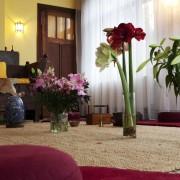
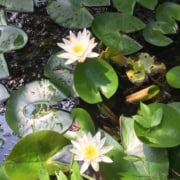
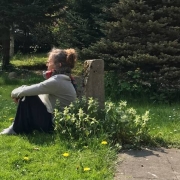
For the Asharum, we still need to make a selection, but with his approval I’ve already chosen three photos to share here, hoping that, in this way, they may bring a little wonder already.
Attunement brings you into the Now
Attunement
The direction of the spiritual endeavour is Attunement
Reaching optimal Attunement is the Task of Human Living
The transformation that is involved
In performing the Task of Human Living
Is the purification of the niche of human living
Attunement is only reached with
Attitudes and Behaviour that express
The transcendental nature of human living
For the application of Nâm Thinking
There are nine Instruments of Attunement
That are useful and beneficial for generating optimal Attunement
Yoginâm, The Book of Nâm, p. 255
The Feast of Greater light
In the Feast of Greater Light we celebrate Attunement in Abbah.
We come together in the aspiration to living in Attunement.
Yoginâm, 2023
The Feast of Greater Light is celebrated through recitations, songs and a ritual dance on the day of the summer solstice on June 21. And although Attunement is not something reserved only for the Feast, because it is something permanent, recitation and ritual is one of the nine instruments of Attunement.
Most important for the Feast though is the gathering of the people, because, as Yoginâm says; it is the gathering of the people that constitutes the Feast. And this is exactly what we experienced.
The fact that June 21 was on a Sunday, made it possible for some people to arrive two days in advance. On Saturday we all worked together in preparing the dinners for both that day ánd the celebration day. There were just a few of us this time, and because we’ve known each other for so long and give direction to our lives in the same way, there was a deep sense of trust. No demands were made, and everyone could simply be. The ease with which we were together, like a family, brought an immense sense of joy.
Newsletter: Self-analysis in a greater perspective
The challenge and delight of the Nâm Weekend of Silence
Knowing oneself is concerned with discovering what both you, the wearer of the ‘persona’, and the mask consist in.
Yoginâm, SIWEB, Dimensions of Experience, 2023 / p.38
In daily life we often long for reassurance, that underpins our sense of security. The roles we adopt -being a loving mother, an attentive friend, or someone always ready to help- affirm that we are important, wanted, seen, and not alone. Yet this dependence on external validation brings uncertainty and traps us in identification with our persona; losing them feels like losing the reassurance we believe we need most.
Participating in a Nâm Weekend of Silence interrupts this self-reinforcing pattern. Though you are still with others in a group setting, which may trigger familiar roles, the silence prevents their enactment. In this stillness, we may discover a different way of connecting—with ourselves, and by extension, with others.
This discovery is the beginning of a form of self-analysis that moves beyond examining our reactions and experiences, touching on something greater than ourselves that cannot be known, only acknowledged. It affirms that, beyond experience, we are transcendental beings:
The unknown of something or someone is OK and it should not always be filled with anything.
Participant of the Intensive Meaningful Living, April
Meaningful Living: The quality of asking questions and taking action
The Sufi mystic and poet Ibn ‘Arabi said:
Reflection without action is avoidance.
When the perspective shifts from misguided identification with roles and patterns to an affirmation of our transcendental nature, of which the divine is an integral part, we create space for transformation:
For instance you may suffer from a natural feeling of insecurity. It will be obvious that this is rooted in programmes that were formed in early childhood. You may understand these programmes, but it is very difficult to transcend these programmes without the awareness that they are contrary to the Natural State of our transcendental being.
Yoginâm, Self-analysis, 2018
The Intensive Meaningful Living is a journey where questions are met with counter-questions, not a conscious striving for letting go and acceptance, but a space where these concepts find you by surprise. As you discover that lightness and fun can accompany life’s serious questions, a realisation may grow that action or transformation lies not in conscious understanding, but in where you direct your attention.
Self-Analysis as is meant here is not a psychoanalysis
It is not a methodology to understand oneself better
Understanding oneself is always an illusion
And constitutes an illusion about an illusion
One cannot step aside for objective observation
Observing oneself always expresses
The current Habitual Programmes of Perception
That determine what one is
Yoginâm, The Book of Nâm, 2020 / p. 289
To lift a corner of the veil on one of the themes covered during the Intensive, you can read Irma’s blog, where she shares her insights and demonstrates, in practical terms, how self-analysis in the context of transcendence can help transform you and your world.
Read Irma's blog here
Practical Guide to Self-Analysis
~ A text by Irma ten Brink inspired by the work of Yoginâm ~
How to Unlock Your Inner Essence:
A Practical Guide to Self-Analysis for Spiritual Transformation
Discover, Heal, and Transform Your World
Yes, those trying to live a spiritual life need introspection and self-analysis. But how do you do self-analysis? How does it work in a way that really matters? A way that truly brings deeper meaning into life? A way by which both you and the world around you transform? A way that can transform your entire life and bring true meaning and purpose?
I have been exploring this for about twenty-five years, and my tools have grown with me. I want to share some insights.
If you are stuck… or feel a longing
If you are stuck in your way of self-analysis, or stuck in life—feeling like you are standing still, feeling alone, sensing no movement, thinking there should be more to life... or you are curious about other ways of living, have life questions, you feel a certain longing within—then this blog is for you.
LivingNâm
Although I will share my personal approach, my teachings come mostly from Yoginâm, and I try to live what he brought to the world: pure wisdom, perspectives, and powerful tools which he called LivingNâm.
He wrote many books and gave interviews that are which are very helpful for reflecting on what it means to be human and to live in continuous transformation toward wholeness or completeness.
Self-analysis from an ego-only perspective
When most people think about self-analysis they think about questions like: “What are my qualities? What is my horoscope? What do I like or dislike? Where are my boundaries and how do I protect them? How can I get what I want?” These questions concern the persona or the ego.
This is natural, however it is good to realise this is only the beginning, and there is much much more!
There is a phase in life when this first focus is natural —it is a startingpoint and part of growing up. But it is good to realise this is a young phase, and it has not much to do with spirituality. It is important you learn to know yourself this way but from a spiritual perspective it is meant to be transcended as well, as you grow into adulthood in a deeper sense than age alone.
After you found out what this 'more' is about, when you have embraced and lived it, then this first face of questions also matures. Working on transforming your ego never stops, but it gains a different depth once it is seen within a wider perspective. You will naturally start asking similar questions learning to know yourself, but the questions will change with a different quality and depth.
If you want to explore what more there is you have to look into another direction. It is this 'more' I want to dive into with you in this blog.
Know Thyself
Inscribed on the temple of Apollo in Delphi is the injunction: “Know Thyself.”
Mystics across traditions—Imam Ali ibn Abi Talib among them and one of the first—say,
This ancient wisdom remains essential for living a spiritual life.
In time I began to realize this is not about my horoscope, becoming more assertive, or merely training skills to protect myself or achieve goals. While these can be related, there is much more behind that wisdom.
I discovered that self-analysis is really about “What am I beyond myself?” What does it mean to be a human being? What is life’s task, meaning and purpose?
There is an Essence you can discover—in silence only
This Essence, the “beyond myself,” the transcendence, this Unknowable Yoginâm refers to with the sound Abbah, is what mystics and sages across ages address. It cannot be described; you must begin looking for it yourself. LivingNâm gave me tools to search for it, and ultimately to become mindful and to remember constantly.
But what happens in the process?
While searching for this Essence—or, as in Arthurian myth, the Holy Grail—you encounter what are often called “your veils”: everything that grabs your attention and prevents attunement with your Essence. It is easy to get lost there.
We can become so preoccupied with the veil itself that we forget we are trying to transcend it to find our Essence. Self-analysis without the aim of attuning to your Essence becomes egocentric entertainment.
You need a practice that guides you: one that helps you transcend the veils through transformation rather than getting trapped in them. A practice that helps you remember—a state of mindfulness.
Yoginâm writes:
He continues:
Although these quotes address more than self-analysis, they are relevant here.
Spirituality is not something you do—you become
Spirituality is not a hobby; it is a way of life. If you want to find what the “Beyond” refers to, you must explore—and that exploration is itself a transformation. Your whole life changes.
If you want to stop searching where it cannot be found, you must change how you search. That requires a completely different perspective on life; once you change your view, you begin to live differently, and life changes naturally. This is unavoidable ánd beautiful.
Self-analysis is an attitude
When life becomes challenging, this attitude helps. If you learn only to look at the “I,” you get stuck and miserable. Only from a wider perspective can things move, transform, and become meaningful.
When you embrace that you yourself are—with all your thoughts, feelings, beliefs, desires, and actions—resonance. And that ás resonance you participate in a wider field of resonance, then you are making progress.
Consider what this implies......!
The world around you, as you see it, is also resonance
Resonance within resonance—think of it as energy. Your energy and the energy of the world flow together like the smoke of two incense sticks: the smoke intertwines and cannot be separated. They influence one another.
Your resonance—created with every thought, dream, and desire, conscious and unconscious—intertwines with the resonance of your world and influences it.
This gives you a powerful key:
You may not be able to directly change the world or the people who influence you, but you can become conscious and choose which resonance you create and allow to blend with the world’s resonance (and, for that matter with, with the Whole in which everything shares).
Make a conscious decision to create positive resonance through your attitude to life, time and again in the present moment.
Of course, yesterday’s resonance is already blended and cannot be changed. But you can observe the consequence of it in your day-to-day life and draw conclusions which gives a second key.
And a second key:
First, start with consciously creating beneficial resonance through your life attitudes, anew - each moment in the Now.
Second, learn to see your daily life symbolically as a mirror. It reflects what you have been creating unconsciously. The more you see life as your mirror and as part of you, the more you recognize subtle signs that point to causes within yourself—how your habitual programs and inner attitudes have co-created your life to this point.
Asha - the Face of the Beloved
These signs can guide you. Poetically this is expressed as seeing life as the Face of the Beloved; in LivingNâm we call this 'living in Asha'.
This approach lets you address unconscious layers that create reality. Your mirror shows how you have unconsciously created your world—because most creation is done with unconscious programmes.
Here is also where the famous synchronicities appear.
Do you see how self-analysis becomes essential and gains ethical meaning? Through self-analysis you can become a co-creator of your world.
Again I want to stress: to transform the veils from the perspective of resonance, you need guidance—powerful tools to support you, guide you, and help you avoid getting lost.
Co-creator
You may have noticed I referred to a co-creator. If you wonder, “If I am a co-creator of my life, who or what is the other part?”—you touch the mystical.
Yoginâm hints at this in the above quote: "Human living expresses what is beyond that living and has an inherent longing for beyond living. This is carried by imagination that in human living gives direction”.
In Poetry this 'Beyond Living' is often named “The Beloved.” In LivingNâm we use the sound "Abbah". Because it cannot be named, we hint at it and use imagination to relate to it and find direction.
Begin by becoming conscious of your thoughts, how you speak about yourself and others, how ethical your desires are, and how judgmental you may be—explore your general attitudes.
When you see the outer world as resonance reflecting your inner world—rather than a world simply happening to you—you can relate to it as your mirror, part of you.
You can ask questions such as: “Show me what I need to see.”
- A recurring issue or conflict: close your eyes, bring the situation to mind, and ask, “What do I need to see?”
- A physical problem, such as a recurring headache: “What do I need to see?”
- An intense dream: “Show me what I need to see.”
- A person you have difficulties with: “Show me what I need to see.”
Sit with the question; allow what comes. Don’t overthink—just sit and breathe and trust that answers arrive when they are ready. Often not as words or thoughts, but as a sudden knowing or an image with a sense of certainty. Sometimes the answer comes later through an overheard remark or a randomly opened book will provide it. Frequently the answers are surprising and unexpected—sometimes not what you wished for—but you sense they are true.
Practice
By practicing this bit by bit, you dive deeper; what is hidden in the subconscious will surface. Why? Because you have set your intent. You want it to happen—even if what comes is not always beautiful—driven by an inherent longing to find what is beyond living.
Take notes
Over time you will see patterns that repeat across situations. When life repeats itself in different forms, it is trying to demonstrate something to you.
Approach life this way and life becomes your guidance. Ignoring the signs life offers can cause problems and illness because you miss what is meant for you to see.
This is why spiritual life is often described as Listening.
As Ibn Arabi said:
Are you inspired?
I invite you to join this search with me for a couple of days—a truly joyful endeavor. A powerful retreat on “Meaningful Living” begins this year 2026 on April 8 - August 12 and October 14—less explanation, more exploration through imagination, reflection, and contemplation.
Looking forward to diving in deep together.
Irma
Asharum Amonines
Newsletter: New opportunities and vibrant visits
What is so beautiful about NâmLiving
NâmLiving is living according to the Ethics of Nâm
The Ethics of Nâm are the way of living
That is guided by Nâm in Attitudes and Behaviour
Nâm is the Affirmation of what is not necessary to know
Because being of it, living itself is its affirmation
In such Affirmation the Ethics for living
Is rooted in and based on Compassion
Compassion is the sharing in the passion, which is living
Compassion is not a concept, it is only happening as a living
That is guided by Loving-kindness, Involvement and Respect
Living the Ethics by Yoginam, January 2026
The beautiful thing about NâmLiving is that it is very practical. The texts of Yoginâm often introduce all-encompassing concepts, like ethics, while at the same time offering translations of how to live them.
Although it sounds simple, it’s not always easy, because in my experience it asks for an unconditional openness in listening. But if you are ready to be involved, listening and following the invitations that life offers can be as simple as in the story below.
“Notre four de boulangerie manque de bois”
It all started when we received an e-mail saying: “Notre four de boulangerie manque de bois” - our bakery oven is running low on wood.
It was an invitation from the community that lives in the castle in Fisenne. They have a stone oven where they bake delicious bread, and this was an invitation to collect wood on their land behind the castle. We like this community and the things they do. They grow vegetables and have a small market on Fridays. They have an imker on their land who keeps bees and makes honey, and they have a fruit orchard from which they make jam. They also work with social workplaces, offering a social working space.
Supporting each other
We value supporting the local economy and being part of a local network. We buy our bread from them and visit their market on Fridays to buy local, organic vegetables. This invitation was another opening to get involved with one another. We went and noticed how surprised and happy the small group was to see us. We walked through the fruit orchard, into the woods. Some people started to collect the wood and we began sawing the tree trunks, separating the dead wood from the greener pieces and making little bundles we could still carry.
Jam and dried fruits for breakfast
We really enjoyed working together, sometimes in silence, sometimes with a small exchange and an occasional joke, revealing the dynamic and connection among them and with us. At the end of the day we were invited for tea. The home-baked bread with jam and honey on the table made for a Burgundian experience. Motivated by the inviting atmosphere, which is also always valued in Amonines, we decided to buy their jam and dried fruits to enrich our breakfast and to be able to offer our guests the possibility of taking something home with them.
The day concluded with the remark that they were very happy that our two houses are coming closer - a sentiment we wholeheartedly share.
Unconventional and imaginative: A playful way of Meaningful Living
Loving-kindness is an attitude of approaching life
Always with an open expectation towards others
You are the cause of the consequence in which you live
Infusing yourself with Loving-kindness as a basis
Will colour you consequence
Living the Ethics by Yoginam, January 2026
Having an open attitude
The course Meaningful Living can be seen as a playful way to practise this open attitude towards others, but also towards yourself and your perspectives on life, touching on the infinite potentiality we can realise when we understand that the way we act, think and speak creates both who we are and our world. As one participant concluded at the end of the course:
'We are part of and creator of our world. We have a responsibility and opportunity'.
The feedback of another participant was more on a practical level, when asked what this retreat did for her:
'The morning meditation with the drum. I never thought I could stand still for so long and after a few days be happy to hear the bell announcing meditation."
A vibrant visit: wonder and adventure in daily tasks
Involvement means an openness to situations as they appear
It means following challenges as they announce themselves
It means helping and giving assistance where it is required
It means a readiness to serve and an interest in other’s needs
It means being hesitant in refusal and in saying ‘no’
What you are presented with may be a Sign of Guidance
This means: carefully manage your activities and concerns
So that your living can be optimally of service
Living the Ethics by Yoginam, January 2026
Doing things together connects you with others
'I’ve been coming to the Asharum for about eight years now. At first to visit my friend, but soon also for my own peace of mind. I now come here about twice a year for my much-needed dose of putting things into perspective, relaxation and reflection. As soon as I open the garden gate, I feel the pressures slip away. I’ve been to Amonines so many times, and every visit is a different experience. Sometimes it is light and spring-like with long walks; other times it is cosy and wintry and I sit by the open fire for hours. More than in previous years, I felt drawn to activities in and around the house. I asked if I could help in the garden. We carried on creating the hedge: transporting tree trunks in a wheelbarrow and planting bamboo canes. We realised that we both love short projects – projects that require little effort but yield quick results, without needing to be finished in one go — talking about letting go ...
I love cooking, so I’m happy to help in the kitchen. We made a warm lunch together, exchanged recipes and discovered that we both love to improvise ánd are incredibly stubborn.
This time, I really experienced how doing things together connects you with others. I’m already curious to see what life lesson awaits me next time.'
Visitor Amonines
Join others in the meditation online!
Newsletter: Experiences of Meditation, Healing, and Devotion
The Causal Investigation - Shamanic Retreat
One of the events in October was the Shamanic Retreat with Anna Montis. Anna Montis, a shaman native to Sardinia, has inherited her shamanic gift from her ancestors, which she has further developed in a spiritual context following her encounter with Yoginâm.
It was wonderful to have Anna back in Amonines. Her powerful energy and strong focus, combined with deep compassion for the participants, created a solid foundation. Within this space, the group of eight — diverse in background, orientation, and age — gradually opened up to the intensive shamanic journeys and the exploration of the Soul.
In causal investigation and causal exploration, you enter a very particular state of Witnessing in which the passive and unconscious aspects of Soul are combined with the active and conscious aspects of Mind. It is a kind of lucid dreaming in which you remain active enough to set the course and passive enough to allow Soul to speak in images.
Yoginâm, SIWEB - Dimensions of Experience (2023)
The retreat had taken the participants to unknown places within the inner landscape.
Especially the third day spoke of a deep sense of inner movement and contemplation as everyone received a personal healing.
For some participants, who are regular visitors to Amonines, shamanism was entirely new. Curious, but without really knowing what they were stepping into, they had signed up because it was facilitated by the Asharum, which gave them a sense of trust.
They were very enthusiastic about the retreat:
It was truly something very special — beyond words. It has changed me as a person; I’m no longer the same.
Two days later, they booked the Advanced Shamanic Retreat in Níjar, from the 21st to the 25th of May.
Also it was a lovely surprise to receive a message of one of the other participants in the language of Soul; the language of images and symbols:
How beautiful it can be to observe your shadow (side)
A weekend of turbulent weather: storms, rain, wind, darkness, but then the sun breaking through, a beautiful reflection of what happened during the retreat. And all of that embedded in the warm nest of the house with the crackling fire in the stove, the well-prepared food and a lovely group, not to mention twice-daily Asha meditation. Two weeks ago already, still having meaningful dreams. And another piece of development set in motion. Very satisfied.
Asharum Amonines and The Garden of Nâm
The Garden of Nâm and Asharum Amonines are both homes of Yoginâm, though he resides in the Garden of Nâm.
Anna Montis found a beautiful way of capturing what makes these two places at the same time one and yet distinctive:
Before arriving at Asharum Amonines I was expecting somehow to feel the physical absence of Yoginâm during my stay there, used as I was to his presence during many years. But surprisingly I didn’t find any trace of his absence. Instead his presence was tangible and warm through the love and kindness that emanate from the residents of the Asharum. Outside the sky was grey and it was raining incessantly but inside the sun was shining fully because of the harmony that reigns in the house.
Asharum Amonines in Belgium is a different place than the Garden of Nâm in Spain, but not less magic. It is just a different expression of the way of Nâm since diversity is obvious in a tolerant path as Nâm.
Her prediction
To both places pelgrims of all kind come for spiritual inspiration and to drink the water from the source of Nâm. In contemplation of these places a memory of about thirty years ago emerges again: I was with a friend sitting on a balcony, looking at a photo of Yoginâm. From the adjacent balcony a woman asked to see the photo. She reacted astonished because she recognised in Yoginâm her former neighbour in another neighbourhood. She was sensitive and clairvoyant. She took the photo in her hands - her eyes to see the future - and with strong determination she said: "He will succeed in the realisation of his great project". While I enjoy the beauty and harmony of places like Asharum Amonines and the Garden of Nâm, I realise that her prediction was right.
Asharum Amonines and The Garden of Nâm created by Yoginâm are Mighty Portals that carry us to different fields, states and experiences, letting us come back again safely after that, to the daily level of existence, but enriched by a strong impuls and with more colour in ordinary life.
These two jewels are reminders of what Yoginâm says: "We are not material beings with a spiritual life but instead spiritual beings with a material expression".
About Asha Meditation with drum
The drum is the shamanic instrument by excellence; its vibration enters the brain deeply and when the rhythm is correct, in a passive listener an adequate receptive state of mind can be reached for the resonance that is collectively generated.
Yoginâm, 2024
Yoginâm, The Book of Nâm (2020)
Asha Meditation is practised daily in the Asharum and part of all our programmes. You can also participate online twice a week. And if you like to experience an intensified programme including Asha Meditation, please feel invited to join the Nâm Retreat of Silence,
Active devotion
On our website the beauty of Active devotion is presented. In response to that we received a request from Valérie to come to the Asharum to stay for a couple of weeks. In Asha she offered her help for October, which was very welcome because of the absence of one of the staff members visiting Yoginâm in Spain, while the others were occupied with the maintenance of the house.
Valérie stayed for a couple of weeks and being experienced in the kitchen, she prepared healthy and delicious meals which were very much enjoyed.
She shared that being in Amonines and her participations in the meditations touched something that resonated deeply within her.
A quick update on the maintenance of the house:
The first half of October the electrician worked hard to get the electrical network up to standard in line with regulations.
On the day of the inspection the inspector and the electrician walked through the house, accompanied by a solemn silence. When the inspector finally asked how we were doing, adding kindly that “if you’re doing well, then I’m doing well too,” We couldn’t help thinking that, in this situation, it was rather the other way round. After the inspector had left, to our relief the electrician shared the good news: we made it — the electrical work was approved!
Newsletter: In embracing what is, Asha gently surprises
Living in Asha: A continuous letting go and creating
Slowly the signs of autumn begin to show themselves. The light is dim, mist hangs over the forest, the trees shed their leaves and fruits, and mushrooms sprout from the ground. Life retreats to its roots. The old becomes a source of nourishment for the new that is yet to come. The air is crisp, and the whole spectacle reminds us that everything passes. It is the movement of life itself, as Yoginâm puts it:
‘I/World’ is Asha, a continuous spectacle of phenomena in situations.
The movement of life - an example from daily living
As summer draws to a close, life in Asha takes on a more tranquil pace. We were expecting only one guest, and despite the delay in maintenance work, we were assured that our sewage system would be ready and functional by 3 p.m., so we were confident that we would be able to welcome our guest without any issues.
As the day progressed, however, we discovered that the toilets would be out of service until 6 p.m. Imagine how awkward it is to tell a guest who has just driven for three hours that they cannot use the facilities upon arrival. The idea was a bit uncomfortable, but the guest was probably already on his way. While we were pondering this, we received a phone call: the guest had fallen ill and decided not to come. The situation resolved itself.
At ten to six in the evening, the doorbell rang. There was a new guest at the door, asking if he could stay the night. Now that the toilet problem had been solved and a delicious soup was already waiting for our original guest, we welcomed him with open arms.
Adding to the day's unexpected turns, our cleaning lady, who would normally have come that morning, informed us that she couldn't come because her car had broken down. Normally her absence would have been missed, but given the circumstances, it now seemed perfectly logical.
At such moments, we are reminded of the beauty of Asha—filled with awe and wonder, and grateful for the unexpected twists and turns that life brings. We realise once again that we cannot control life, we can only trust that life will take care of itself!
Acceptance of what is
Instead of limiting potential to meet our expectations while protecting our needs, it is possible to be present in the moment and open to whatever comes. When guests come to the Asharum, they bring their own history, their own life experiences, their own desires and needs to find peace and let go. Sometimes people come for a Private Meditation Retreat, but are not yet ready to stay in silence; other times, people participate in the activities and find themselves entering into a deep silence. Being able to trust that everything that is needed will present itself is perhaps the key to fully accepting what is. The same applies to living in a community:
The Nâm Community is primarily sharing in an Ethics. In that Ethics it is recognised that people who are rooted in this same endeavour behave towards each other as a family.
...
Nobody is ever judged, because from the perspective of the community everything and everybody’s behaviour is Asha, and as such a teacher for finding Abbah for those who witness it.
From: Nâm Community by Yoginâm, September 2025
Thanks to the community
We were very and pleasantly surprised by the news that Yoginâm was planning to contribute his birthday present to help pay for the maintenance work that urgently needs to be done in Amonines. Thank you for this wonderful gift!
Thanks to everyone who donated -whether for Yoginâm’s birthday or in response to our earlier appeal- an incredible sum of over €9,000 has been raised! This amount will enable Amonines to cover all essential expenses.
All this support – financial or otherwise – nurtures a deep sense of community and belonging and is greatly appreciated. Indeed together, we keep this place alive as a beacon of silence and beauty. Thank you very much!
Events
What Came Before and….
In terms of events, September was a relatively quiet month, marked by a Yoga Retreat and the Weekend of Silence. During the yoga retreat, one participant –who turned out to be a photography student– took photographs of the garden; green and vibrant, a testament to a summer of rainy nights and sunny days.
Garden-Impressions by Sarah Rodriguez
… What Lies Ahead
The Essence of Meditation
This course explores different ways to enter a meditative state, including the unique practice of "breathing through the skin". Often seen as the boundary between self and world, the skin becomes a gateway—opening us to greater spaciousness and connecting us to a state beyond boundaries.
Meaningful Living
Held several times a year, the value of this programme becomes more apparent with each time. It’s both moving and inspiring to see participants step out of their comfort zones and into the unknown. While it’s natural to interpret new experiences through familiar lenses, this event gently challenges you to let go of that tendency—and open fully to something truly new.
Nâm Retreat of Silence
For those seeking to reconnect with the essence of being and embrace inner quiet during the transition into the new year, we offer the Nâm Retreat of Silence.
Through a daily rhythm of meditation, silence, and shared meals, this retreat creates space for stillness and inner discovery. As thoughts settle, the gentle rhythm of the breath anchors you in the present.
A daily online HarpMood with Yoginâm in Spain significantly deepens the experience, gently dissolving inner barriers and guiding transformation.This retreat brings lightness to daily life and opens the way to a sense of unconditional wellbeing, the inherent potential of all living.
Returning to Letting Go and Creation
Letting go makes room for something new. This can happen on many levels—especially in how we think and what we believe. Often, we’re not aware of how these ideas shape the way we see ourselves and the world.
One question that often comes up in this context is: “How can I stop myself from overstepping my boundaries?”
Irma wrote a blog about this, showing how your perception can change the flow of Asha. To read the blog, click here
Newsletter: Nâm Retreat, the Quran and Meaningful Living
Nâm Retreat of Silence
Sitting silently
Doing nothing
Rain falls
And the grass grows by itself
Zen-poem
Beginning on 28 December, the Nâm Retreat of Silence will take us into the new year. Through a daily rhythm of meditations and silence, the retreat offers space to pause and reconnect with the essence of being. Unique techniques are used to guide the participants into meditative states. As the days pass, the gentle rhythm of the breath anchors you in the present; thoughts settle, and the inner space of silence deepens. A daily online HarpMood with Yoginâm in Spain significantly enriches the retreat. The sounds in the HarpMood reflect the state of those present. Through tuning the harp in different moods, Yoginâm guides the retreat in such a way that hidden barriers can surface and dissolve. The Asharum provides a safe environment to support this transformative process.
As the Nâm Retreat of Silence at the end of this year is fully booked, we are very happy to welcome you for the next retreat in April. If taking part in the Nâm Retreat feels like too big a step you might consider one of our Weekends of Silence instead. The next Weekend of Silence begins on 30 January.
A Nâm Selection from the Quran
Last month a new book by Yoginâm was published: “A Nâm selection from the Quran”. The front cover is modest, white and simple like with most of the other books. When opening the book the beautiful and intriguing Arabic script immediately captures your attention.
The introduction begins:
Although I was living in an islamic environment and shared in its customs, I had only glanced superficially at some translations of the Quran. I was not really caught by it. It is only now, when I finally decided to make an effort and read the Quran in Arabic, that I discover a very different book. Both clear and ambivalent, both ordered and seemingly incoherent. I discovered a richness in meaning that is often lost in translation.
Struck by how close the text is to Nâm, Yoginâm explains how he began to make some notes on these correspondences.
Gradually it turned round and I found in the Arabic text of the Quran a beautiful way to explain Nâm and the Ethics of Nâm.
The newly published book has a way of its own.
Lying open on the floor, the electrician saw it when he made his round through the house. Pleasantly surprised by the familiarity in relation to his Arabic background he asked: ‘Are you reading Arabic?’ After a brief explanation his curiosity grew and he began reading the Arabic text with the translation underneath. “Yes, that is correct” he commented. He then started reading the longer quotation above the other; “No that is not right,” he said. But not entirely sure of his own judgement, he took his phone and looked it up, “Yes, indeed, it is correct”
“A Nâm Selection from the Quran” is now available for online order.
Meaningful Living
This course explores a particular perspective on life, using meditation, imagination and contemplation. A central challenge in this journey is the aspect of letting go of preconceived ideas and a strong identification with the self, in order to attune to something beyond - an unknowable reality that cannot be grasped by the mind. As Yoginâm explains,
Attuning in the first place involves a humility; a readiness to listen and discover. It also involves not imposing your programmes on everything. They are the obstacles that make you deaf and blind. Attuning is an all-in transformation: ultimately a transformation into Abbah.
Yoginâm, "A Nâm selection from the Quran’, 2025
Each course develops a character of its own
Despite its structured programme, each course develops a character of its own. Last month, we had a small group of five participants, with whom we ventured into largely unfamiliar territory.
The differences in experience were clearly felt, ranging from someone with deep life and spiritual experience to another for whom everything was entirely new, with others in between. It was beautiful to see how these differences complemented one another.
Naturally, each participant faced their own challenges. For the person who had been exploring spirituality through Taoism and Zen Buddhism, the challenge was to remain open and not fall into the habitual comparison with what he had learned before, concluding, “I already know this.” Such an attitude can easily close a door rather than open one. Given how difficult it is to let go of one’s own ideas, there was deep respect for the way he navigated this challenge.
By contrast, for the participant to whom everything was new, openness came more easily. With nothing to measure against, there was simply an invitation to engage with the material, unburdened by preconceived ideas.
The process unfolded harmoniously, showing how people at different stages of life can enrich one another.
If you have serious questions about life, and the idea of gradually letting go of your personal story resonates with you, you are welcome to join the next course!
Visitors in November
The visitors who came to the Asharum in November were relatively young—a fact they themselves noticed.
One guest said he had been surprised by the low average age; he had expected to be one of the youngest. The place, and the drum as part of the meditation, brought him a deep sense of peace—something he had not expected to experience so quickly.
The last
The last apples, the last pruning and a final flower before the garden surrenders to winter.
Newsletter: Open for Awareness to enter your life
There is nothing in life that is not Asha
Everything that is stressed in NâmLiving tries to activate Awareness.
Living in Awareness, which is the same as Attunement in Abbah, is called Optimal Living.
Asha is as Abbah appears in 'I/World'.
Yoginâm, 2023
It is also Abbah that is remembered in Asha
Whereby every aspect of life as it appears
In the phenomena and circumstances of daily living
Is demonstrating Abbah as Asha is its face
There is nothing in life that is not Asha
It is in Asha that Peaceful Acknowledgement
Awe, Wonder and Guidance are optimally realised
Yoginâm, The Book of Nâm
Nâm Retreat of Silence and how it was experienced
This retreat is an instrument to open the door to awareness and the deeper layers of who we are. The five daily meditations—known as Attunements—follow a rhythm of chants, recitations, drumming, and silence. Participants do not actively engage but are invited to be present with an open attitude. This is a challenging invitation, as being truly open and present necessitates the "self" stepping aside. Often, mechanisms such as fear and resistance come into play, obstructing trust and surrender.
It was remarkable how, on the first day, I had to overcome strong resistance when you began singing. I felt trapped, anxious, and drawn into something I didn’t want. However, I allowed it to pass… everything within me—through my body, spirit, mind, and soul. It turned out to be the exact opposite: a liberation. I felt freer than ever.
Once in surrender and trust, one may experience a sense of being lifted up, especially through the recitations, another participant shared. Whether one is aware of it or not, the attunements, recitations, and HarpMoods possess a transformative quality that bypasses the mind and understanding, initiating a process that is not restricted to the moments when one sits down for meditation:
In particular the presence of Yoginâm with the online HarpMood at the end of each day is invaluable, guiding the retreat in such a way that hidden barriers can surface and dissolve:
To read the feedback of all the participants click here or book a retreat below, you are most welcome!
If taking part in the Nâm Retreat feels like too big a step you might consider one of our Weekends of Silence first.
The longer Personal Meditation Retreat
Emerging from silence after five days, one participant remarked that she would have liked the retreat to continue. And indeed, longer retreats are available.
The programme is called the Personal Meditation Retreat and, as the name suggests, it can be tailored to individual needs. It offers the opportunity to withdraw from everyday life and live according to one’s own rhythm; to recover from a challenging period or burnout; or to stay in an environment that supports a creative process that requires focus and clarity.
Depending on individual needs, the retreat may include two to four meditations per day, silence throughout the entire retreat, or only during certain parts of the day. For those wishing to engage in contemplation and reflection, a guiding text is also available.
The programme is normally offered for a maximum of five days. However, there are two occasions in the coming year when a longer stay is possible: from 19 to 31 May, and from 14 to 26 July.
If you are interested, please find more information and book your stay below
The Feast of Lesser Light and its significance
December 21 is celebrated across cultures as the day of the solstice. From this day onwards, the sun will gradually ascend, remaining above the horizon a little longer each day until it reaches its highest point. The Feast of Lesser Light is celebrated on this day, but what is the significance of this celebration within Living Nâm?
The Feast of the Lesser Light is a celebration in which people come together in order to celebrate that in this togetherness Asha is realised as the Way in which we aspire Attunement in Abbah. It is the Feast of darkness that searches for the Light. In Asha we recognise that this Light is not coming from somewhere, but that we are the wick that needs to be lit.
Yoginâm, 2023
The celebration itself is a ritual that includes songs, dance, and recitation. The recitation provides continuous support for Attunement throughout the day. The songs and dance are a celebration in joy, not for amusement as Yoginâm says, but with the purpose to open the participants for a certain reality.
How one of the participants experienced the Feast:
It was chilly outside, and daylight faded early. In the Ardennes, clouds hung low between the hills. Silence enveloped Asharum Amonines. But inside, a lovely wood fire crackled as we enjoyed warm tea and reunited with old friends while meeting new faces. The winter solstice was approaching, the shortest day of the year. From then on, the days grow longer, and a little more light will surround us each day. In Asharum Amonines, we were able to experience the entire feast in Nijár with Yoginâm. Online, indeed, but we were there above all in our hearts. It was a celebration to remember. With fourteen participants in Amonines, it was pleasantly busy and lively, yet quiet and subdued at the same time. Every moment possessed its own intensity.
We recited Yoginâm's texts in unison, we listened, touched to our very cores by the beautiful singing, and we danced as one, united by the compelling sounds of live music and, of course, the HarpMood. Time ceased to matter; the celebration felt endless and, before I knew it, it was over. Next year again, at the same time, in the same place.
Marjolein
Events calendar:
To view all inspiring events in 2026, click below!
How people experience the Nâm Retreat
How take care of myself without boundaries
How can I take care of myself without protecting boundaries
Recently, I wrote a blog about protecting one’s boundaries and how, from a spiritual perspective, this may not be very helpful. You can read the full blog here. Today, I want to delve a bit deeper into this topic, as it’s truly a shame to close off doors, and I invite people to open them—both for themselves, for their surroundings, and for the world, which so desperately needs this!
I was never someone who established my own boundaries
This time, I’d like to approach the topic through a personal story. I always write from personal experiences. I was never someone who established my own boundaries, and it really affected me at times. I couldn’t say no, nor could I stand up for myself. And honestly, I still struggle with that! However, what used to cause me issues has now become my strength. It benefits me and those around me!
I have learned something much more beautiful, powerful and fruitful
Over the last twenty years, I’ve learned something much more beautiful, powerful, and fruitful. I’ve increasingly realized how everything is part of a larger whole. This isn’t something to explain in detail; we cannot fully grasp that greater whole. However, we can relate to it and live in accordance with it.
I take care of that whole, which includes myself
Within this larger whole that I am a part of, I try to listen to the signals that speak to me. I aim to do this with an open attitude. I take care of that whole, which includes myself. I am not separate from this whole, as it is important to remember that the ‘greater whole’ is not something I relate to as a separate entity!
Even if I am feeling tired myself
This means that sometimes I help someone who looks tired and might need a boost, even if I’m feeling tired myself. I can choose to believe that the other person may need it more. At other times, I can opt to step back and take the rest I realize I require—not because I want to, but because I know that others benefit when I’m fit and healthy.
When you learn to listen well
When you learn to listen well, you start to notice the right signals and can tell when it’s better to take care of someone else or yourself. The whole shows this. We also refer to this as Asha. This is always personal; others cannot determine what your Asha is.
Taking care of yourself is not a selfish act
#Self Care
Taking care of yourself is not a selfish act; quite the opposite. It’s always about making balanced choices, considering the circumstances involved. Self-care can sometimes be postponed, though at times it cannot!
The moments when I feel the urge to establish a boundary, forgetting that we share in a larger whole, often come when I’ve ignored the signals that have already been presented to me. I may have gotten lost, charged ahead, or simply didn’t feel like listening, thinking it would be fine. But eventually, there are consequences, and that impacts others as well.
Signals in Asha are neutral and do not consider what we find pleasant or unpleasant. They point the way—period. So, I know now that I better avoid those delicious chocolates after many times learning the hard way, facing consequences that others around me can also endure.
I had a listening attitude
Returning to how my lack of assertiveness and ability to say no has turned into an advantage: because I’ve always had a caring attitude—sometimes at the expense of myself, I discovered how everything comes back to you.
I had a listening attitude that helped me discover Asha, a journey of discovery that is still ongoing! Now, I know that I only need to care for the whole and simply listen to the signals coming from it.
Tools for transformation
On this path HarpMood by Yoginâm was certainly one of the very helpful tools for transformation.
Being in Yoginâm's presence through HarpMood, either live or through a recording, has opened me for the many subtleties life holds and helped me to learn to see these signals which can be subtle as well.
And now I can trust!
I can trust now that the whole will take care of me! I could never have discovered this if I had solely focused on myself. Should you wish to explore this theme further, book a spot for the “Meaningful Living” event we’ll hold on November 26 2025, a powerful five day event. More information here.